
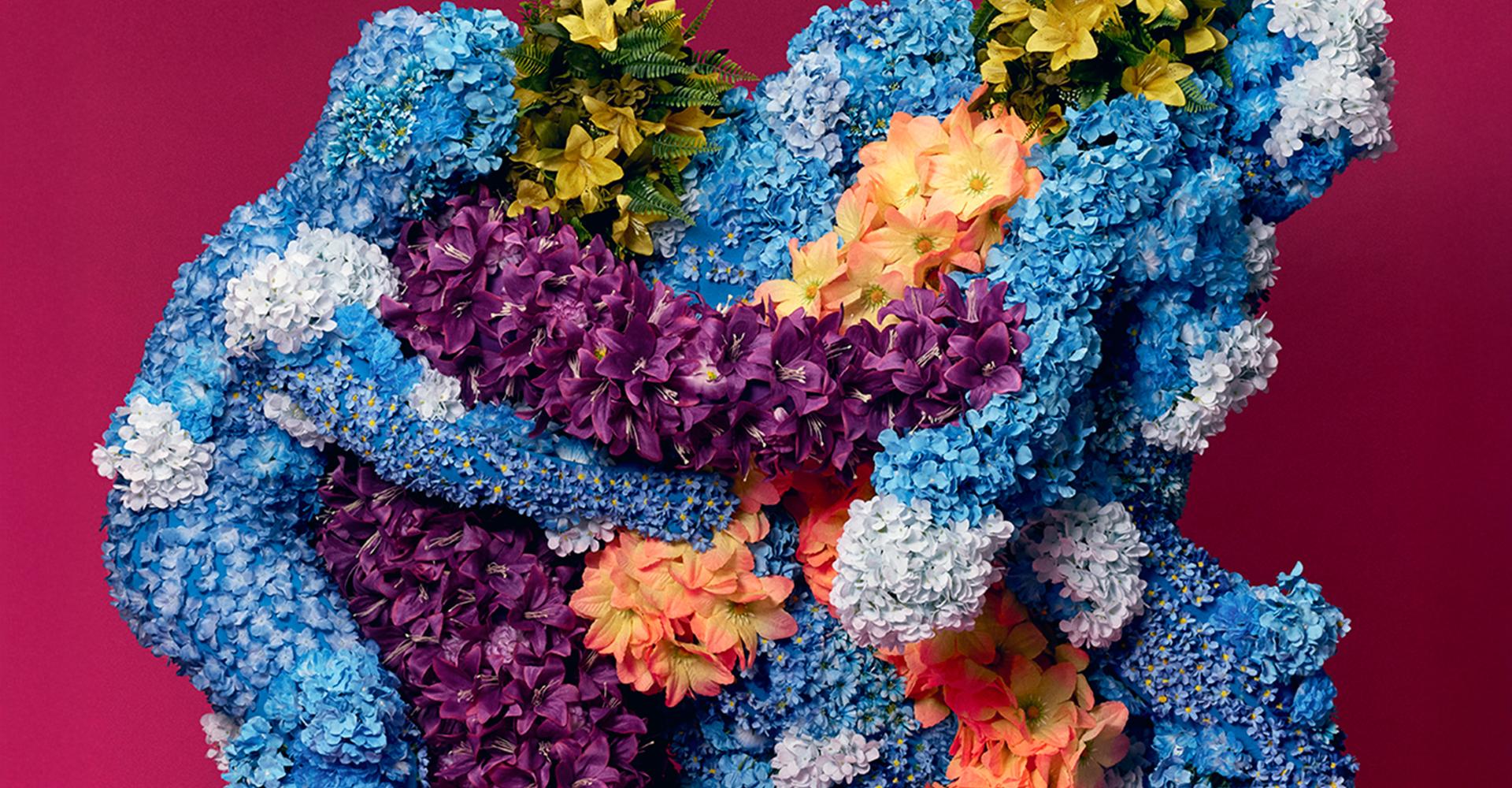
Victoria Ruiz
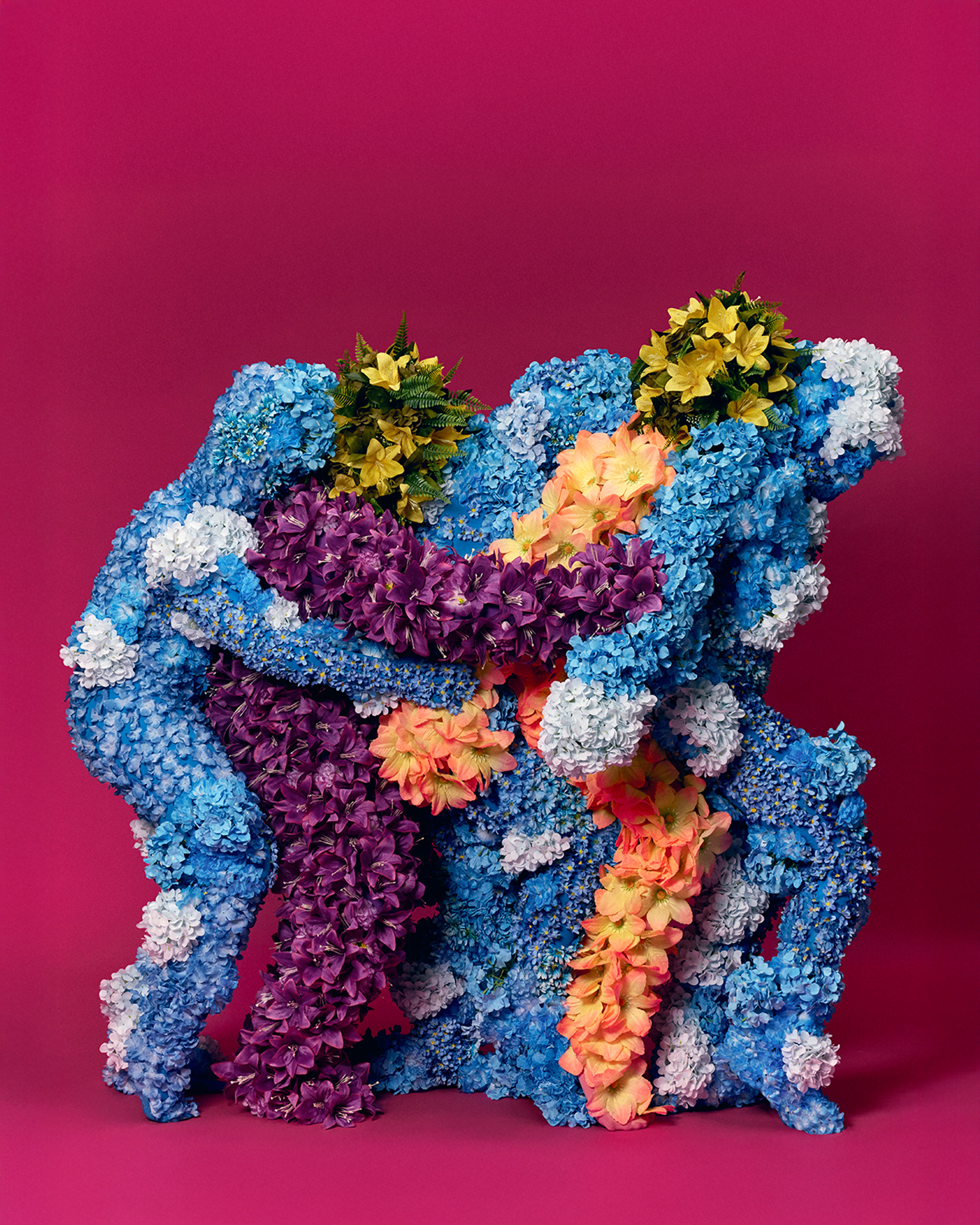
—We Knew the World in Fragments of Color, 2026
Now on view at Faena New York
We Knew the World in Fragments of Color reflects on Victoria Ruiz’s experience of being born in Venezuela during political turmoil and leaving her native country for the United States at a young age.
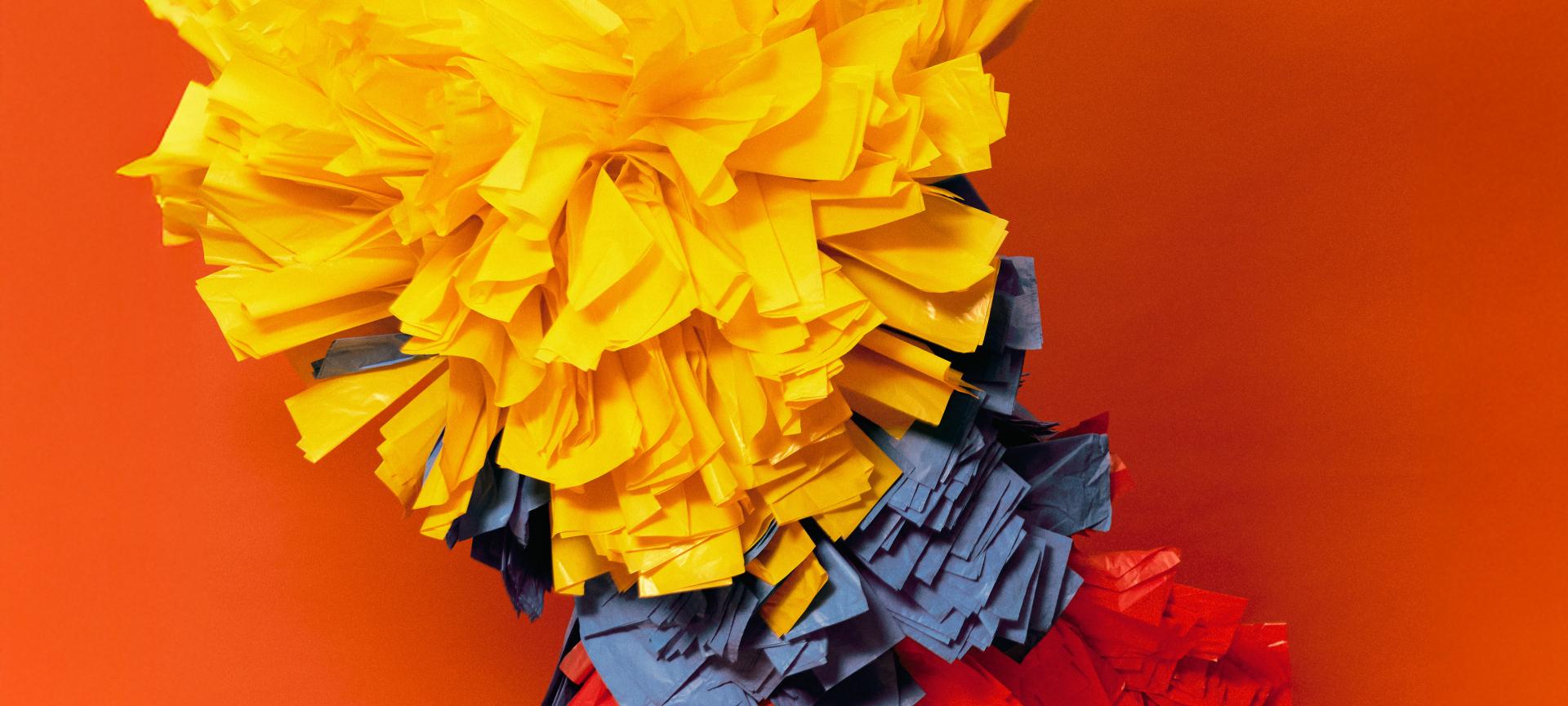
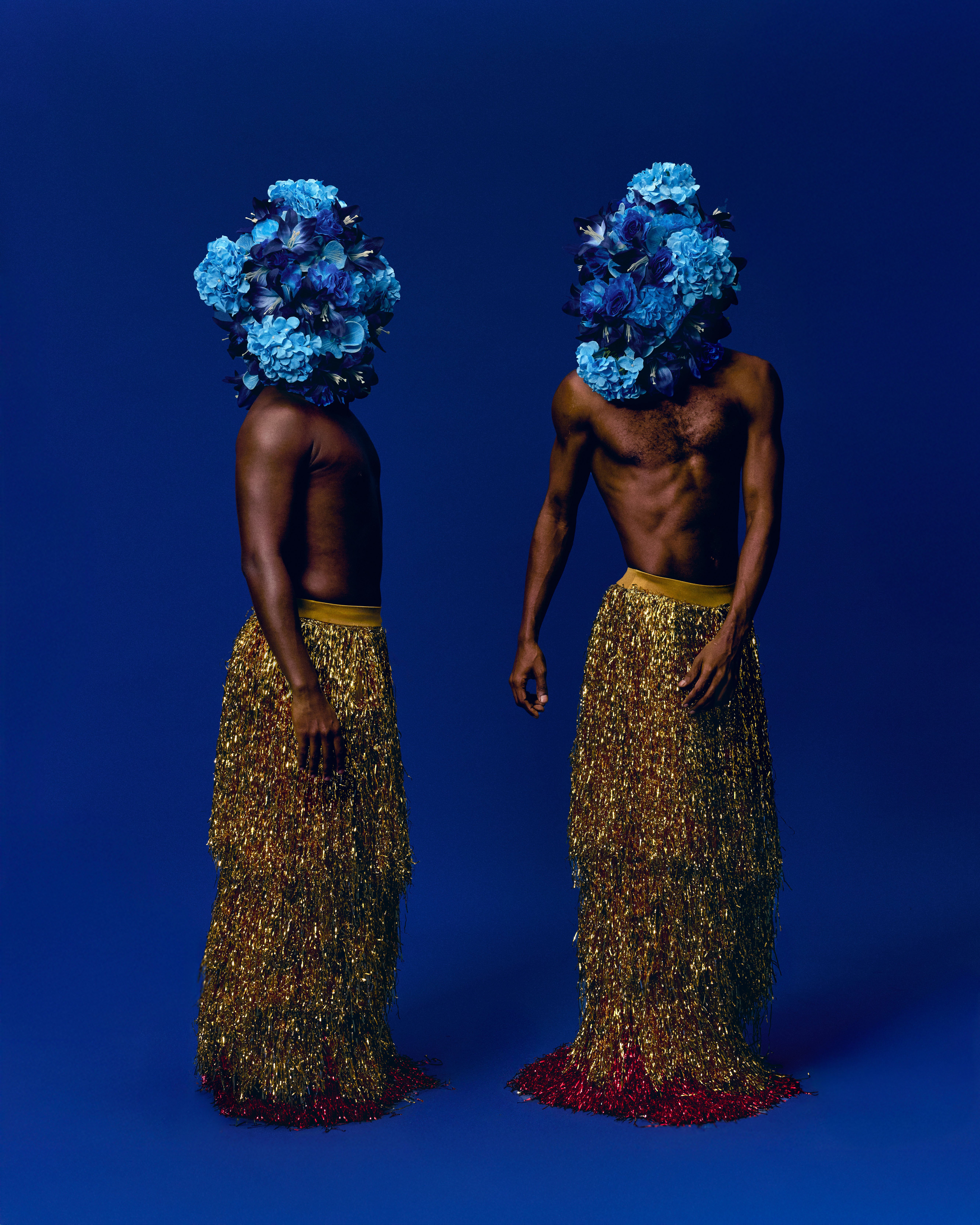
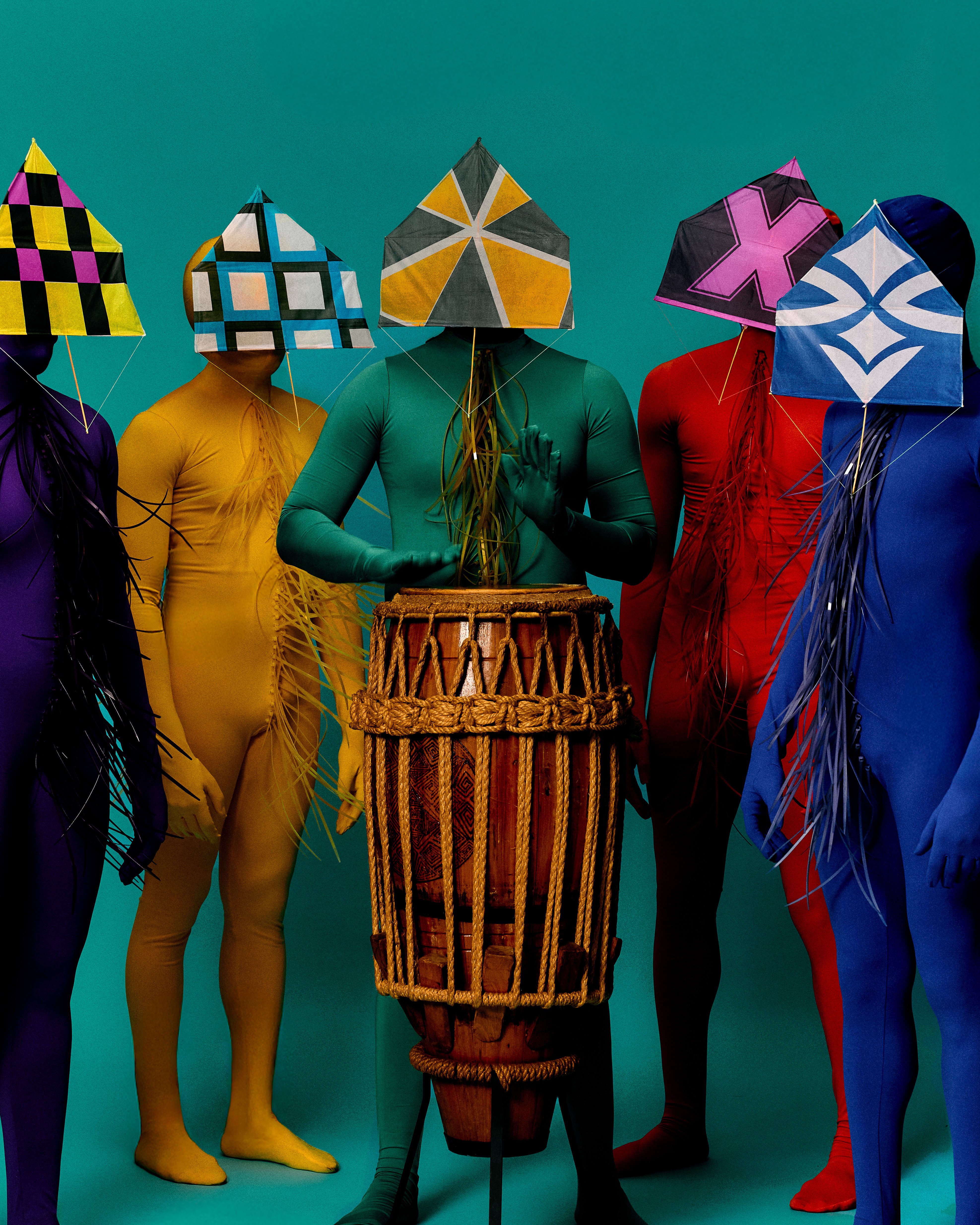
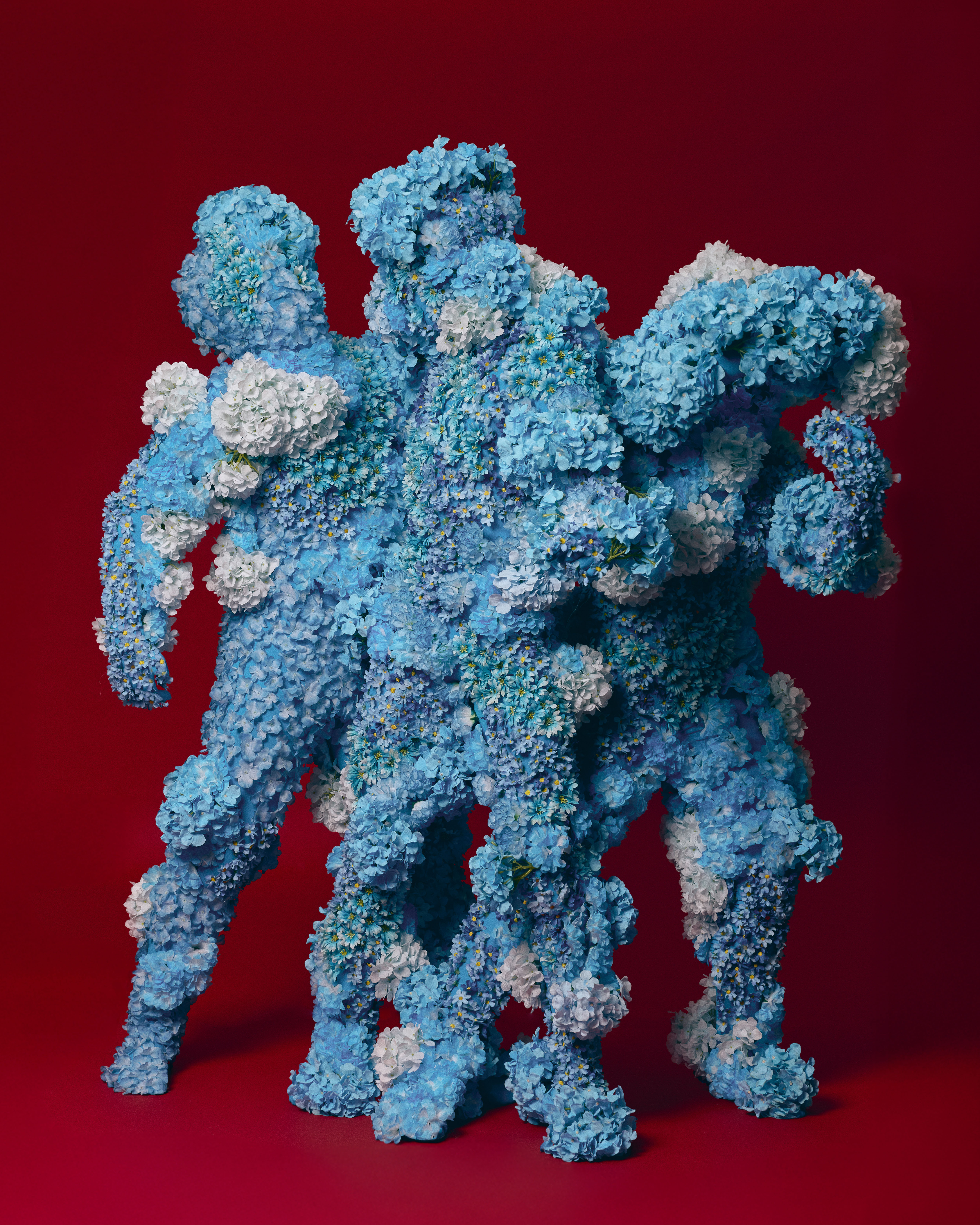
Utilising handcrafted full-body suits — drawing from Latin American cultural symbolism, spirituality, and a strong chromatic language — the artist stages a sequence of ten photographs in which the subjects convey meaning against a coloured backdrop.
Across this series, she represents successive stages of Venezuela’s recent reality, each carrying its distinct historical and emotional weight. Meanwhile, through performative self-representation, her internal world unfolds as one shaped by fragmentation and tension resulting from displacement.
The work traces her attempt to reconstruct the scattered fragments of her passage across geographies and states of being, shaped by nostalgia and by the persistent scrutiny placed upon migrant identity — particularly that of the Venezuelan diaspora in the United States.
Meaning is embedded through richly layered symbols, from floral choices and costume details to a palette alive with colour and shadow. Dreamlike imagery unfolds through the perspective of a child suspended between worlds, capturing the quiet shifts of hope and uncertainty that accompany the experience of immigration; a perspective in which everything feels familiar and strange at once.
In this sense, memory is reimagined as fractured yet luminous: like shards of tinted glass refracting identity, resilience, and faith. The work is a meditation on fragmentation as a condition of migration that does not seek coherence but rather embraces multiplicity, suggesting that belonging is not recovered but continually assembled.
Through a kaleidoscope of memory, displacement, and spirituality, Ruiz reflects on how life between worlds reshapes perception, and colour itself becomes a language of survival and belonging.
The world began in red.
A hunger for control painted everything.
Truth came in fragments, each claiming to be whole.
Compassion whispered.
And those who noticed could still see the cracks, and the chance to act.
We shared the same sky.
We spoke the same language.
Yet invisible walls kept us apart.
Blue felt calm,
but beneath the serenity,
isolation and silence ran deep.
Calm became obsession.
Silence became noise.
Yellow glows like sunlight on steel, like danger disguised as day.
One mask.
Flowers shaped like weapons.
Violence was always present.
A masked figure danced, alive with passion.
Beside them stood a towering presence in yellow, red and blue.
The colors of home.
To love a place so much that it hurts.
To miss it, even as it fails you.
Above, a red macaw flew,
messenger of gods,
keeper of bonds that distance cannot break.
Here, we found arms that stayed.
Presence, trust, care
these made a refuge.
Family built by choice, not birth.
The people who refused to let go became the pulse of belonging.
A lone rhythm moves through time,
stirring the spirits and the world around us.
Unseen energy guides every step,
connecting past, present and those yet to come.
Through memory, ritual and this quiet force,
we are carried forward,
led home.
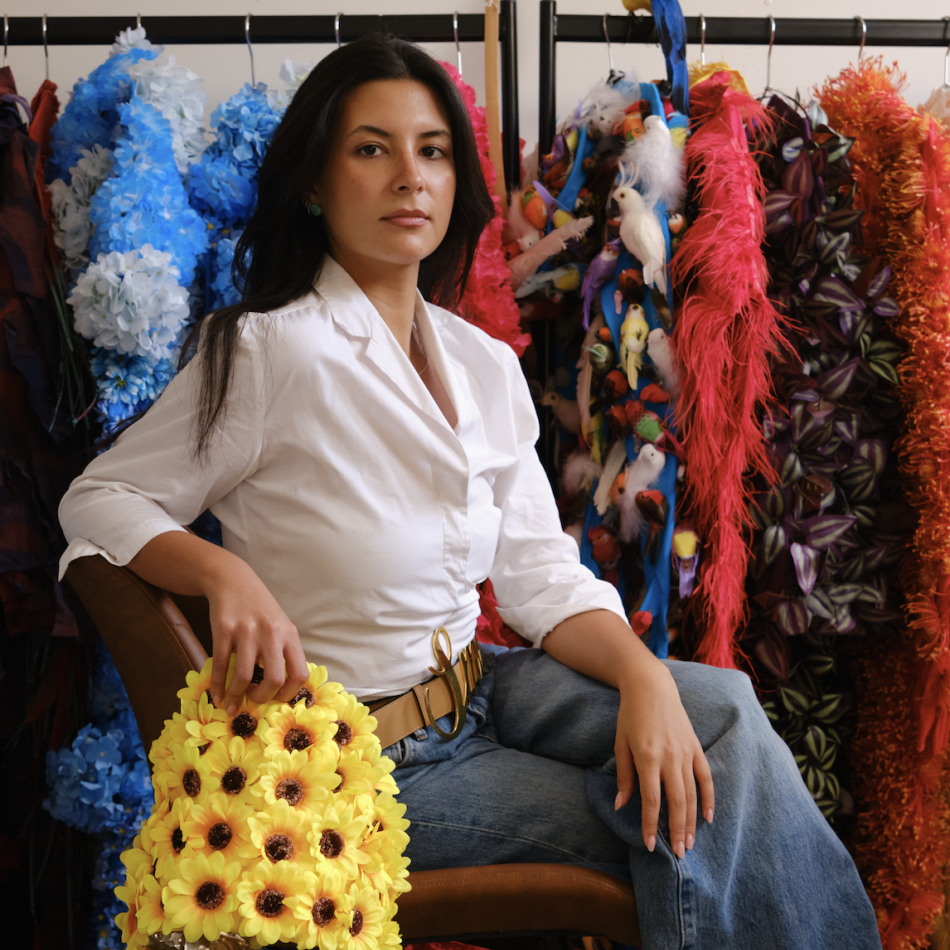
ABOUT THE ARTIST
Victoria Ruiz is a Venezuelan multidisciplinary artist and Central Saint Martins graduate (2022) working across photography, sculptural garments, and live performance. Rooted in activism and the carnivalesque, her practice explores identity, cultural resistance, and Afro-diasporic spirituality.
She is currently a resident at Sarabande: The Lee Alexander McQueen Foundation, where she continues to expand her multidisciplinary practice.
MEET THE ARTIST
Our rendition of the Proust Questionnaire is our unique take on the famous parlor game that gained popularity, although it was not originally created, by Marcel Proust, the renowned French essayist and novelist. Proust held the belief that by responding to these questions, individuals unveil their genuine essence.
What is your idea of perfect happiness?
- To live with a deep sense of faith
Which living person do you most despise?
- Nicolás Maduro
What is the trait you most deplore in yourself?
- Over thinker
What or who is the greatest love of your life?
- My dad Carlos Ruiz and my best friend Helena Cebrian
When and where were you happiest?
- In a waterfall in Rio de Janeiro
What is your favorite occupation?
- Artist
What do you consider the most overrated virtue?
- Neutrality
On what occasion do you lie?
- When a lie is beneficial in order to set a boundary
Which talent would you most like to have?
- Playing the tambor venezolano
Which living person do you most admire?
- My dad Carlos Ruiz
What is the trait you most deplore in others?
- Hypocrisy
What is your favorite journey?
- My creative journey
Which words or phrases do you most overuse?
- Caralho
What is your greatest regret?
- Allowing people in who don’t respect my boundaries
What is your current state of mind?
- Protective of my energy
Who is your favorite hero of fiction?
- Master Yoda
What do you consider your greatest achievement?
- Being where I am now and knowing that I got here through hard work, respect, and ambition
What is it that you most dislike?
- Non empathetic people
If you could choose what to come back as, what would it be?
- A flower
What is your most treasured possession?
- My work
What do you regard as the lowest depth of misery?
- Living without love, purpose or hope.
Where would you like to live?
- Rio de Janeiro
What is your most marked characteristic?
- Passion
What do you most value in your friends?
- Empathy
Who are your heroes in real life?
- Carlos Ruiz (Dad), Helena Cebrian (Best friend) and Claudia Kopke (Adoptive mother)
What is your greatest fear?
- That we will in a world where we lose the ability to understand and hear each other
What is your motto?
- Hope is an act of resistance.
Production: Giulia Costa
Production Assistant: Ana Luiza Moura
Movement Direction: Vivian Guyrá
DoP: Gustavo Cruz
Lighting & Photography Assistance: Felippe Costa & Caio Backer
Costume Assistance : Maria Antonia Mallet & Milena Pinheiro
Title Design & Graphics: SLOW
Custom Typeface & Treatment: Rafael Zugliani
Sound Design: Louis Le Mahec
Dancers: Hiltinho Junior, Allenkr Soares, Junior Andrade, Moises Pepe, Pedro Barbosa, Patrick Domingues
Percussionits: Ricardo Kilumu
DIGITAL ART PROGRAM
The Faena Art Digital Art Program presents a curated selection of video and digital artworks, transforming the monitor into a site for experimentation, reflection, and dialogue between art, technology, and the viewer.